Kroner is one of the most searched currency terms online, yet many people still confuse it with krona, krone, or the euro. This guide breaks down what kroner means, which countries use it, and how its value works.
You will learn the difference between krone and kroner, how each Nordic currency operates, why the euro never replaced them, and how exchange rates and central banks shape their worth.
What Does Kroner Mean?
Kroner is the plural form of krone, used in Danish and Norwegian for the national currency unit of Denmark and Norway. It literally translates to crown, referencing royal coins once issued by Scandinavian monarchies.
Simple Definition of Kroner
Kroner means crowns, the plural of krone. One krone equals one unit, while kroner covers any amount greater than one, similar to how English uses dollar and dollars.
Kroner Meaning in English
In English, kroner translates to crowns. This naming pattern also appears in the Swedish krona and Icelandic króna, all sharing the same Latin root, corona.
Countries That Use Kroner
Four Nordic nations use a currency built on the krone or krona name, each operating its own version with a distinct exchange rate and central bank.
Denmark
Denmark uses the Danish krone, coded DKK, managed by Danmarks Nationalbank. It has been pegged closely to the euro since 1999 through the ERM II mechanism, keeping its value remarkably stable.
Norway
Norway uses the Norwegian krone, coded NOK, issued by Norges Bank. Unlike Denmark, Norway floats its exchange rate, so its value shifts with oil prices and global demand.
Sweden
Sweden technically uses krona, not kroner, coded SEK. Many people mistakenly group it under kroner, but the spelling and plural form differ, even though the currencies share historical roots.
Iceland
Iceland uses the Icelandic króna, coded ISK. It is the smallest and most volatile Nordic currency, having survived a severe banking collapse in 2008.
Difference Between Krone and Kroner
Krone is singular, meaning one unit of currency. Kroner is plural, used for any quantity above one, just as English uses dollar and dollars.
Krone vs Krona
Krone is used in Danish and Norwegian, while krona is the Swedish and Icelandic spelling of the same word. All four terms trace to the Latin word corona, meaning crown.
| Country | Currency Name | Singular | Plural | Currency Code |
|---|---|---|---|---|
| Denmark | Danish krone | krone | kroner | DKK |
| Norway | Norwegian krone | krone | kroner | NOK |
| Sweden | Swedish krona | krona | kronor | SEK |
| Iceland | Icelandic króna | króna | krónur | ISK |
Why Is It Called Kroner?
The name kroner comes from crown symbolism on early Scandinavian coins. When Denmark, Norway, and Sweden formed a monetary union in the nineteenth century, they chose crown as a shared name representing royal authority.
History of the Kroner Currency
The kroner currency system evolved through royal coinage, a shared monetary union, the gold standard, and independent floating currencies managed by separate central banks.
Scandinavian Monetary Union
Denmark, Norway, and Sweden formed the Scandinavian Monetary Union in 1873, replacing older currencies with a shared krone based on the gold standard, letting coins circulate freely across all three nations.
Gold Standard Era
One krone held a fixed value in gold during this era, keeping prices stable, until World War I forced each country to abandon the shared gold backing.
Modern Floating Exchange Rates
The union dissolved in 1914. Since then, each country has managed its own currency, with Norway, Sweden, and Iceland floating freely while Denmark keeps a tight euro peg.
Kroner Currency Meaning in Banking
In banking, kroner refers to the base monetary unit in Danish and Norwegian financial systems. Banks quote kroner in accounts, loans, and transfers, always distinguishing DKK from NOK.
Kroner in Forex Trading
Forex traders track kroner currencies as part of the broader Scandinavian bloc, often called Scandies. The Norwegian krone and Swedish krona trade actively, while the Danish krone stays in a narrow band due to its euro peg.
Why Traders Watch Scandinavian Currencies
Traders watch these currencies because they react strongly to oil prices, interest rates, and export data. The Norwegian krone is closely tied to crude oil markets, making it a popular indicator currency.
How Much Is Kroner Worth?
The value of kroner depends on which currency is meant. As a general reference, one euro typically equals roughly 7.5 Danish kroner or around 11 Norwegian kroner, though rates shift daily.
Approximate Currency Comparison
The table below shows an illustrative snapshot of how many kroner or krona units typically exchange for one euro. Rates fluctuate daily and should be checked through a live converter before any transaction.
| Currency | Approximate Units per 1 Euro | Peg Status |
|---|---|---|
| Danish krone (DKK) | Around 7.46 | Pegged to euro |
| Norwegian krone (NOK) | Around 11 to 12 | Floating |
| Swedish krona (SEK) | Around 10.5 to 11 | Floating |
| Icelandic króna (ISK) | Around 140 to 150 | Floating |
Kroner to USD Explained
Converting kroner to US dollars requires checking the specific country, since Danish and Norwegian kroner trade at different rates. Norwegian kroner have historically traded between nine and eleven per dollar, while Danish kroner track the euro to dollar rate.
Kroner Symbol Meaning
The kroner symbol represents Danish and Norwegian currency in written and digital formats, appearing on price tags and financial statements.
kr
The symbol kr is used for Danish krone, Norwegian krone, and Swedish krona alike, placed before or after the number depending on local convention. Iceland uses kr too, sometimes written as ISK internationally.
Kroner Pronunciation
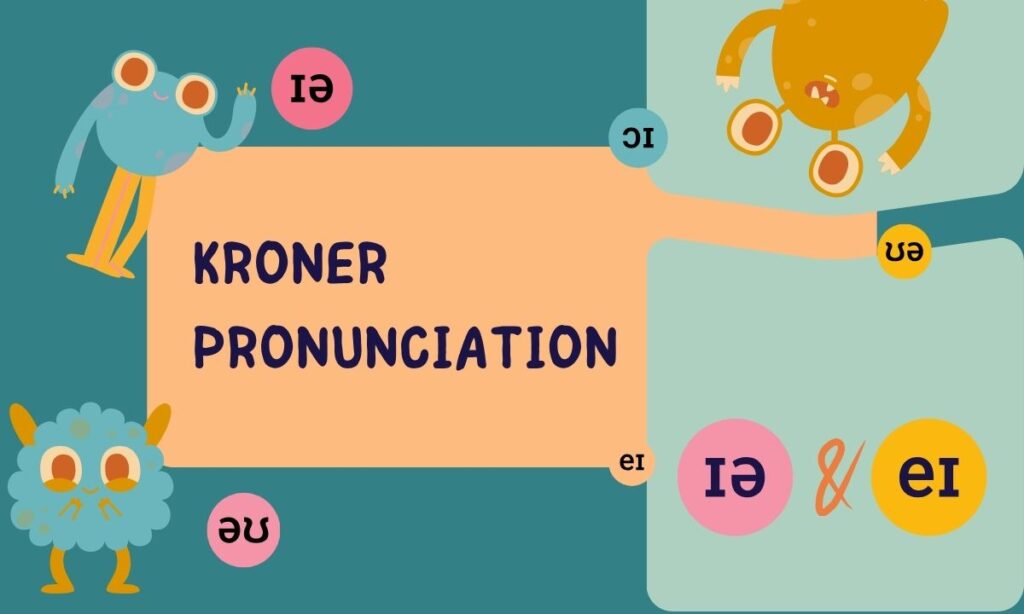
Kroner is pronounced similarly to the English word crow followed by ner, roughly KROH-ner. Pronunciation varies slightly between Danish and Norwegian speakers, but the crown meaning stays consistent.
Pronunciation Guide
- Danish: pronounced closer to KROH-nuh
- Norwegian: pronounced closer to KROH-ner
- English speakers: commonly say KROH-ner or KROH-nur
Kroner Meaning in Urdu
Kroner is explained in Urdu as Scandinavian mumalik ki currency, jiska matlab crown hota hai. Yeh Denmark aur Norway ki currency hai jo unke central banks manage karte hain.
Kroner Meaning in Hindi
Kroner ka matlab hindi mein mukut yaani crown hota hai. Yeh Denmark aur Norway ki mudra hai, jise unke central banks jaari karte hain.
Is Kroner a Real Currency?
Yes, kroner is a real, legally recognized currency. It refers to the plural form of the Danish krone and Norwegian krone, both issued by official central banks for daily and international trade.
Why Nordic Countries Still Use Kroner Instead of the Euro
Denmark, Norway, Sweden, and Iceland retain their own currencies for reasons rooted in economic independence and monetary control, even though most surrounding European nations adopted the euro decades ago.
Reasons Include:
- Independent interest rate policy suited to local conditions
- Flexibility during oil price shocks and export swings
- Referendums in Denmark and Sweden that rejected the euro
- Norway and Iceland sitting outside the European Union
- National preference for monetary sovereignty
Scandinavian Currency System Explained
The Scandinavian currency system consists of four related but independently managed currencies, each issued by its own central bank and responding differently to global economic pressure.
Shared Features of Nordic Currencies
- Names derived from the word crown
- Managed by transparent, independent central banks
- Rank among the more stable global currencies
- Fully convertible on international forex markets
- Support extensive digital and cashless payments
Danish Krone Explained
The Danish krone, coded DKK, is Denmark’s official currency, tightly pegged to the euro since 1999, keeping fluctuations minimal and predictable.
Important Facts About Danish Krone
- Issued by Danmarks Nationalbank
- Pegged within a narrow band around 7.46 per euro
- Subdivided into 100 øre, mostly phased out
- Used in Denmark, Greenland, and the Faroe Islands
Norwegian Krone Explained
The Norwegian krone, coded NOK, is issued by Norges Bank and floats freely, making it more sensitive to oil prices and global commodity demand than the Danish krone.
Important Facts About Norwegian Krone
- Closely linked to Brent crude oil prices
- Backed by one of the world’s largest wealth funds
- Not pegged to the euro
- Popular among traders as a commodity currency
Swedish Krona Explained
The Swedish krona, coded SEK, is issued by Sveriges Riksbank and is technically distinct from kroner in spelling, though often grouped with it due to shared linguistic origin.
Important Facts About Swedish Krona
- Sweden is among the most cashless societies in the world
- Sveriges Riksbank is the oldest central bank still operating
- SEK floats independently, not pegged to the euro
- Subdivided into 100 öre, mostly out of circulation
Icelandic Króna Explained
The Icelandic króna, coded ISK, is issued by the Central Bank of Iceland and remains the most volatile Nordic currency, shaped by the country’s small economy and tourism revenue.
Important Facts About Icelandic Króna

- Suffered a dramatic collapse in the 2008 financial crisis
- Recovered through capital controls and IMF support
- Has no minor subunit in circulation
- Heavily influenced by tourism and fishing
Kroner Currency Codes Explained
Currency codes let banks and traders identify each kroner currency without confusion, since several countries share similar names but issue separate money.
Scandinavian Currency Codes
| Currency | ISO Code |
|---|---|
| Danish krone | DKK |
| Norwegian krone | NOK |
| Swedish krona | SEK |
| Icelandic króna | ISK |
What Do the Letters Mean?
Each ISO code follows a pattern: the first two letters represent the country, the third represents the currency name. DKK is Denmark krone, NOK is Norway krone, SEK is Sweden krona, ISK is Iceland krona.
Kroner in International Trade
Kroner currencies play a meaningful role in global trade through Norway’s energy exports and Denmark’s pharmaceutical and shipping industries, both generating significant foreign currency inflows.
Major Nordic Exports
- Norway: crude oil, natural gas, seafood
- Denmark: pharmaceuticals, machinery, wind turbines
- Sweden: vehicles, telecom equipment, machinery
- Iceland: seafood, aluminum, tourism
How Exchange Rates Affect Kroner
Exchange rates for kroner shift based on interest rate decisions, export revenue, and global investor sentiment, with Norway’s krone particularly sensitive to oil price swings.
Key Factors That Influence Kroner Value
- Central bank interest rate changes
- Global oil and commodity price moves
- Inflation and employment data
- Investor demand and trade balance
Kroner in Tourism
Kroner currencies are used daily by millions of travelers exploring Scandinavia’s cities and fjords, with card payments now dominating over physical cash.
Countries Using Kroner Attract Millions of Visitors
Denmark, Norway, Sweden, and Iceland welcome tens of millions of tourists each year, drawn by natural landmarks and Nordic design, all relying on stable currency systems for consistent pricing.
Digital Payments and Cashless Scandinavia
Scandinavian countries lead the world in cashless transactions. Sweden has reduced physical cash to a small fraction of total payments, with mobile apps and cards handling most daily transactions.
Scandinavian Economies and Currency Stability
Nordic economies are widely regarded as stable and well regulated, which supports confidence in their kroner and krona currencies among global investors.
Why Scandinavian Currencies Are Trusted
- Strong governance and low corruption
- High foreign exchange reserves for economy size
- Transparent central bank communication
- Diversified export economies
Kroner in Foreign Exchange Markets
Kroner currencies trade actively on global forex platforms, with the Norwegian krone and Swedish krona seeing higher daily volume than the more tightly managed Danish krone.
Popular Forex Pairs
- EUR/NOK
- USD/NOK
- EUR/SEK
- USD/DKK
Kroner Conversion Explained
Converting kroner into another currency involves multiplying the amount by the current exchange rate, which changes throughout each trading day based on live market activity.
Example Conversion Scenarios
- 1,000 Danish kroner converts to roughly 134 euros
- 1,000 Norwegian kroner converts to roughly 90 euros
- 1,000 Swedish krona converts to roughly 93 euros
How Central Banks Manage Kroner Currencies
Each Nordic central bank independently manages its own currency, setting interest rates, controlling money supply, and intervening in markets when necessary.
Main Responsibilities
- Setting benchmark interest rates
- Managing inflation targets
- Overseeing currency reserves
Scandinavian Central Banks
| Country | Central Bank |
|---|---|
| Denmark | Danmarks Nationalbank |
| Norway | Norges Bank |
| Sweden | Sveriges Riksbank |
| Iceland | Central Bank of Iceland |
Inflation and the Value of Kroner
Inflation directly affects how far kroner stretches for everyday purchases. When inflation rises faster than wages, the real purchasing power of kroner declines, prompting central banks to raise interest rates.
Nordic Money Terminology Explained
Understanding basic Nordic money vocabulary helps travelers and businesses navigate pricing and financial news across Scandinavia.
Common Currency Vocabulary
- Krone or krona: crown, the base currency unit
- Øre or öre: minor subunit, mostly phased out
Scandinavian Currency vs Euro
Scandinavian currencies operate independently from the euro, giving each country flexibility to set its own monetary policy rather than following the European Central Bank.
Key Differences
| Feature | Kroner Currencies | Euro |
|---|---|---|
| Countries | Denmark, Norway, Sweden, Iceland | 20 European Union members |
| Central Authority | Individual national banks | European Central Bank |
| Exchange Rate | Fixed or floating by country | Shared single currency |
| Policy Control | National governments | Eurozone collective policy |
Are Kroner and Krona the Same Currency?
No, kroner and krona are not the same currency. Kroner refers to Danish and Norwegian currency, while krona refers to Swedish and Icelandic currency. All four share linguistic roots but operate as entirely separate, independently valued currencies.
Quick Comparison
- Kroner: used in Denmark and Norway
- Krona: used in Sweden and Iceland
- Both mean crown, but neither is interchangeable at face value
How Kroner Became Important in Global Finance
Kroner currencies gained global relevance through Norway’s oil wealth, Denmark’s export economy, and the broader reputation of Nordic nations for financial transparency.
Interesting Facts About Kroner
Kroner currencies carry a rich history and several traits that distinguish them from other global currencies.
Scandinavian currencies have royal origins
The word krone directly references the crown symbol once stamped on royal Scandinavian coinage, connecting the modern currency system to centuries of monarchy.
Norway’s sovereign wealth fund is enormous
Norway’s oil-funded sovereign wealth fund is one of the largest in the world, built to convert oil revenue into long-term financial security for future generations.
Sweden is nearly cashless
Sweden has moved further toward a cashless economy than almost any other country, with most retail transactions completed through cards or mobile apps instead of physical krona notes.
Denmark tightly manages its exchange rate
Denmark maintains one of the tightest currency pegs in the world, keeping the Danish krone within a narrow band against the euro through active central bank intervention.
Iceland’s currency survived major financial shocks
The Icelandic króna endured a severe collapse in the 2008 financial crisis, yet Iceland’s economy rebuilt through capital controls, tourism growth, and structural reform.
Common Mistakes People Make About Kroner
Several misunderstandings about kroner persist online, often confusing travelers and casual finance readers.
Thinking kroner is one single currency
Kroner is not a single unified currency. It refers to Danish and Norwegian money, each issued separately with different values, even though both share the same plural word.
Confusing kroner with euros
Kroner and euros are entirely different currencies. Denmark uses kroner despite being a European Union member, and Norway is not part of the European Union at all.
Assuming krone and kroner are different currencies
Krone and kroner represent the same currency in singular and plural form, not two separate currencies. This is a grammatical distinction, not a financial one.
Mixing Swedish and Danish spellings
Many people incorrectly write krona when referring to Danish or Norwegian money. Sweden uses krona, while Denmark and Norway use krone and kroner.
How Businesses Use Kroner Internationally
International businesses trading with Denmark or Norway must account for kroner exchange rates in invoicing and reporting, often using forward contracts to hedge against currency risk on the floating krone.
Kroner Meaning in Economics
In economics, kroner represents a fiat currency, meaning its value is backed by government policy and market confidence rather than physical commodities.
Why Scandinavian Currencies Remain Strong
Scandinavian currencies maintain relative strength due to disciplined fiscal policy, strong export sectors, and low inflation compared to many other economies.
Main Reasons
- Sound banking regulation
- Strong trade surpluses in Norway and Denmark
- High public trust in central bank policy
The Future of Kroner Currencies
The future of kroner currencies will likely balance national monetary independence against pressure from digital currencies, EU integration debates, and shifting energy markets, particularly for oil dependent Norway.
You can also checkout ths article as well Kroner Meaning: The Essential Guide to Nordic Currency
Final Thoughts on Kroner Meaning
Kroner simply means crowns, the plural of krone used across Denmark and Norway’s currency systems. Understanding this, along with how krona differs in Sweden and Iceland, clears up a common currency confusion.
Whether you are traveling, trading, or studying Nordic economics, knowing how each kroner currency operates gives you a clearer picture of Scandinavian finance and its steady role in global markets.